


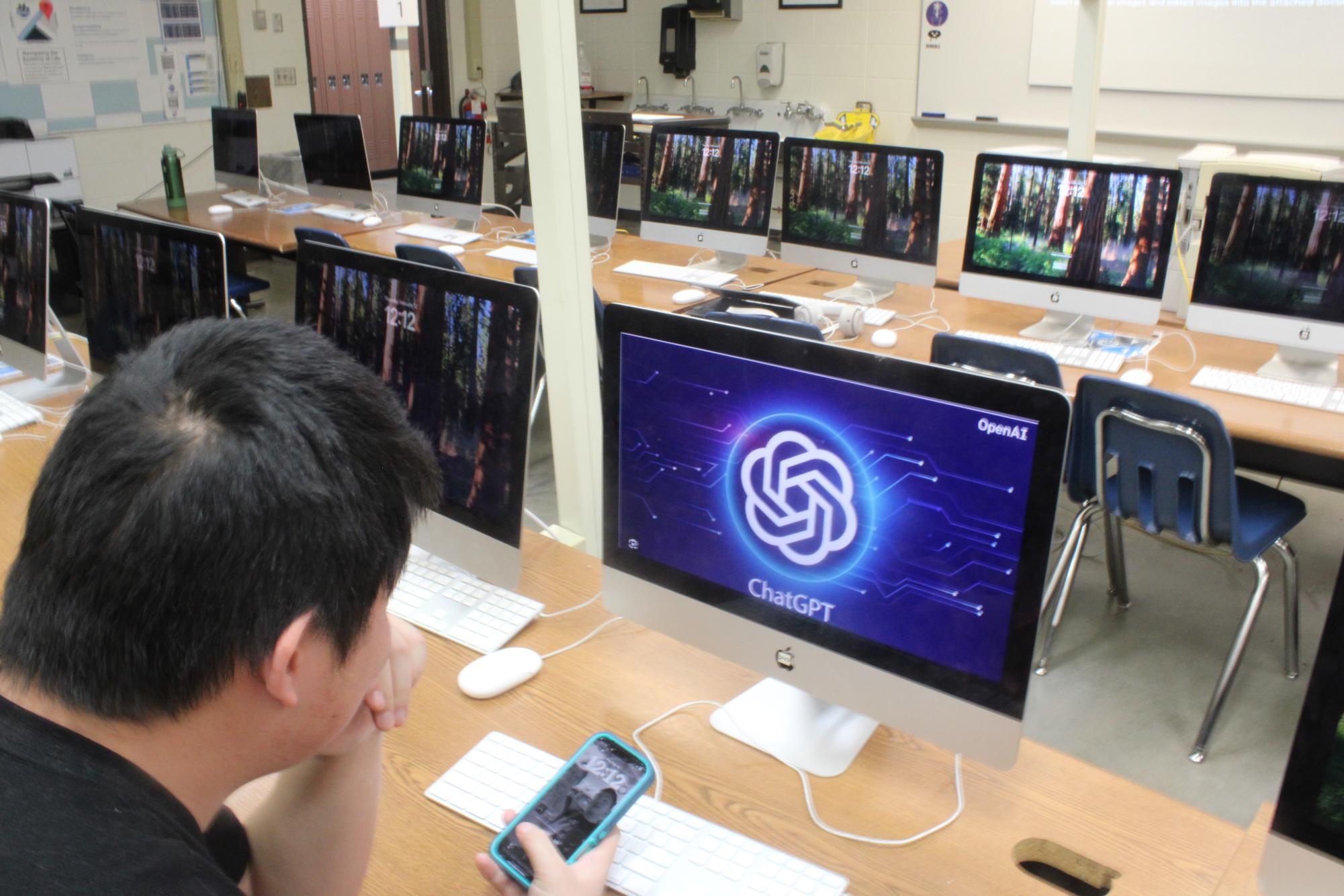
Over the past three decades, we have seen an unprecedented rise in technology within our educational curriculum. This increase in technology has transformed students’ experiences in schools. Although analyzing the overall position of technology is subjective, no one can deny the impact it has had. Many positives have come from this, so have downsides.
Technology has altered the culture within schools in many positive ways. Teachers teach using presentations, students submit assignments through computers, and school information is passed through a website. With technology, schools have become efficient. Author Lulia Popescu writes, “Thanks to cloud services, virtual classrooms, mobile apps, and social media, sharing and accessing school content has become easier”. This quote proves the many positives of technology. Technology allows students today to access information from pleather of sources, which makes students more independent as they don’t need to rely as much on their educators. Additionally, resources such as AI, grammar assistance, and other apps have provided helpful tools to students. With technology, virtual classrooms are implemented, allowing students to gain education without having be in the classroom physically. These classes have made gaining an education very convenient for millions of people. In fact, author Devlin Peck writes, “The number of online learning users is expected to increase to 57 million by 2027”. These people who use online learning sometimes don’t have the schedule to take in-person classes, thus making education available to a larger audience. These changes have seen a spike in students’ grades.
On the other hand, all these technological advancement has caused students to become too dependent on technology. Skills such as handwriting, proofreading, and attention span have tanked dramatically. Firstly, not all students have an equal chance at success with technology. Although most school districts provide technological tools for all students, internet connectivity varies between students. This gives an unfair advantage to certain students and districts, creating more academic inequality. Furthermore, with the rising popularity of AI, artificial intelligence, academic integrity is being compromised. This has caused students to cheat on assignments much more easily. Nothing has caused educators more hardship than tackling the use of AI in students’ assignments. Not only are students too dependent on AI, which is an issue on its own, but AI isn’t accurate, causing students to be misled. The most shocking realization is that even with the resources available online, technology has led to worse performance in schools. Due to the constant usage of phones within classrooms, students are focused on their academics, leading to worse performance.
Overall, the use of technology has brought many positives and negatives. Highlighted by the ease of use and Artificial Intelligence, students are having mixed emotions about technology. While certain students may benefit from technology, others have been negatively affected. However, no one can deny the impact it has had on education.
Work Cited:
Popescu, Iulia. “The Impact of Technology on Modern Education.” Avixa Portal. Accessed February 11, 2026. https://www.avixa.org/pro-av-trends/articles/the-impact-of-technology-on-modern-education.
Peck, Devlin. “Online Learning Statistics: The Ultimate List in 2025: Devlin Peck.” RSS, January 3, 2025. https://www.devlinpeck.com/content/online-learning-statistics.